


Hirogami was provided by Kakehashi Games for review. Thank you!
3D Platformers aren't a hugely popular genre these days, so I'm always excited when we see a new game try something different. Hirogami is aiming to do exactly that, offering a paper aesthetic similar to Sony's Tearaway and a unique "folding" mechanic that lets you change the player character's movement and abilities on the fly.

Hirogami puts you in the role of Hiro, a master of the art of "folding", which is the game's main unique mechanic, the ability to fold into different creatures and inherit their abilities.
After the "Blight" has reached your homeland, it's up to you to fight back and restore peace to the land. There isn't too much of a "storyline" in Hirogami; the Blight appears out of nowhere after a short monologue of the protagonist hinting at his past, before quickly meeting up with 2 fellow villagers, Ruz Pappy and Shiori, in order to embark on a journey to protect the village. You'll meet the occasional animal that you save from the Blight, but they don't really have much to say, and nothing that adds to the story.
Movement is key in a 3D Platformer, and while Hirogami does feel OK, it also feels off. I can't quite focus on exactly what feels off about the movement, but it almost feels stiff or stilted, and it isn't quite as responsive as I'd like. It's serviceable, but you often feel slow or the character doesn't move the way you would hope. This is perhaps exacerbated by the different forms of Hiro behaving differently in movement and physics.
The folding mechanics are the highlight, and it is a neat feature. Being able to fold your character at will into a frog or an armadillo, even a paper plane, is always a treat. The game rarely tells you what shape you should be to proceed, but it's intuitive enough that you can figure it out pretty quickly. Some areas can be a little annoying in that they require you to switch between shapes constantly to proceed, and in these cases, I wish the level design allowed you to stick to 1 form for a bit longer, rather than every new jump or puzzle requiring a different form.

One thing I really took issue with in Hirogami, however, is the camera system. The game uses a fixed camera perspective that you can merely pan with the right thumbstick. Unfortunately, this method really does not suit a 3D Platformer. Not having a traditional third-person camera that can be rotated and zoomed in really hurts the experience, and within the first 30 seconds of playing the game, I was getting irritated.
The fixed perspectives prevent you from looking around the level as you wish, and you also sometimes don't follow the character close enough to see dangers ahead of you. This caused some problems with depth perception, which can be a struggle when walking away from the camera.

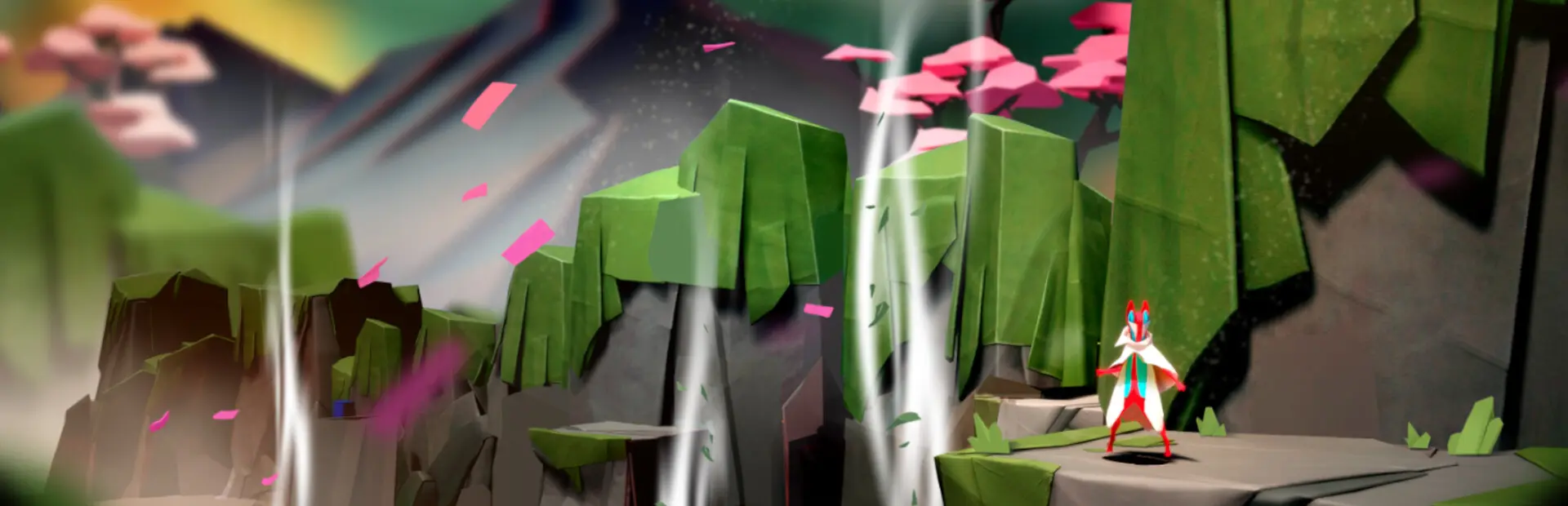
Visually, Hirogami is quite nice to look at. The stop-motion animation style might not be everyone's cup of tea, but you get used to it, and the visual style itself is well-suited to the paper theming. Sound design is also quite nice, with paper sound effects as you perform certain actions and a Japanese-inspired soundtrack that blends in nicely.
It isn't a long game by any means, and most players will probably see the end within 5 hours of playtime, but there are secondary objectives that you can aim to get by retrying each level. The game is priced at $29.99, which I think is fair given its short length.
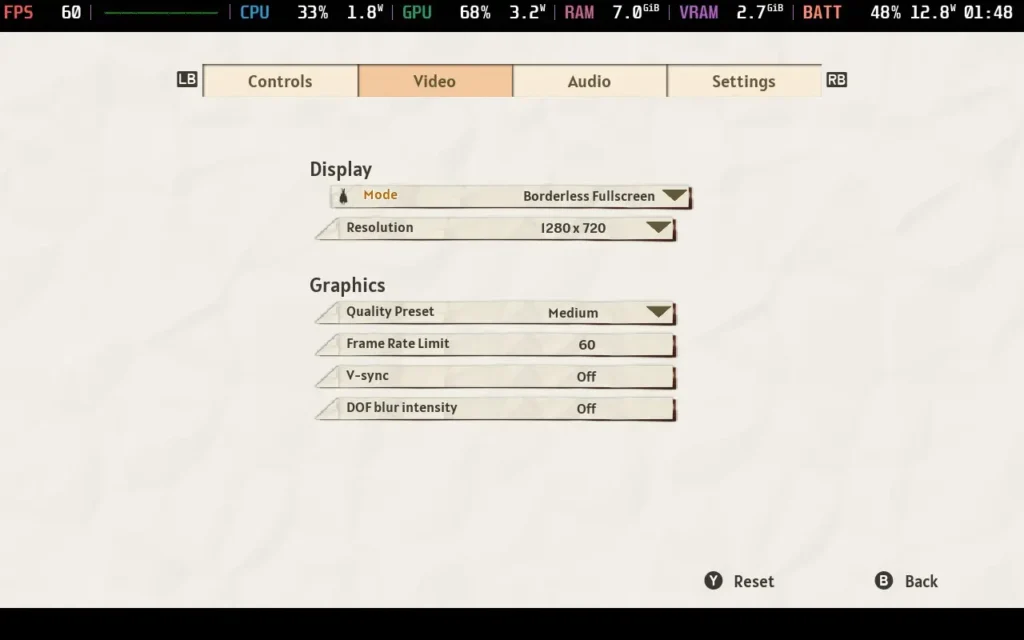
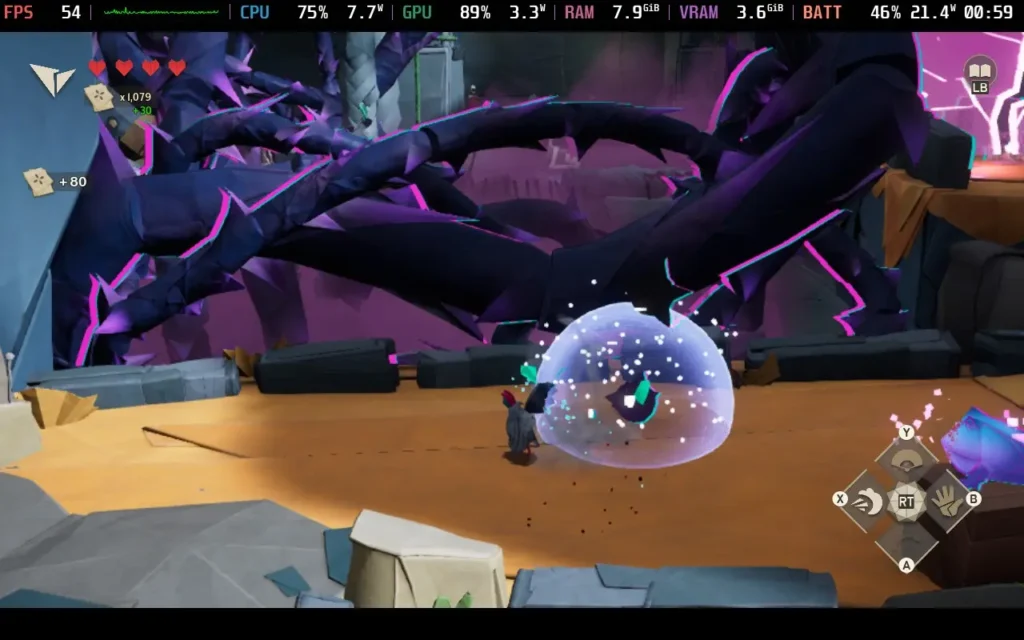
Hirogami is best played with a controller, so we have no issues with the controls. Unfortunately, the game doesn't support 16:10 resolutions, so we do have black borders along the top and bottom, as we have to play at 1280x720 resolution.
I personally would recommend that you use the "Medium" quality setting, then the in-game frame limiter set to 60. Depth of Field I turned off, as I don't like the effect, and it does cost some performance.
Unfortunately, even with these settings, the game struggles to hold a locked 60 FPS; some levels frequently run in the low 50s. Even more disappointing, the game's "Low" quality settings look awful, employing raw resolution scaling (No FSR/XeSS here) and eliminating most lighting/shading, making it preferable to deal with the frame drops than the poor image quality.
Strangely, the game hits the Steam Deck's CPU hard, meaning we're always drawing significant amounts of power even when nothing is happening. Expect to draw around 19W-21W from the battery, giving us about 2.5 hours of playtime on a Steam Deck OLED and about 1.5 hours on an LCD model.
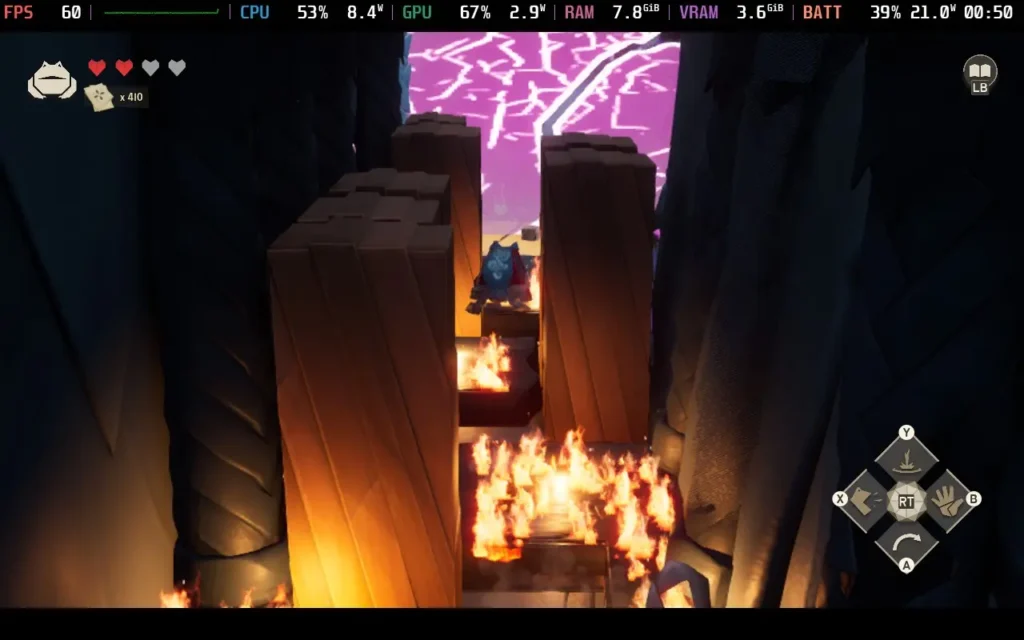

The temperatures were generally in the 65 °C - 75 °C range. The fan does ramp up in order to keep the CPU cool, which gets hammered in Hirogami.
Hirogami has no accessibility options.
Hirogami has some missed potential. If the movement was tighter, things worked a little smoother, and the game was optimized, it would be an easy recommendation for me. There are some redeeming qualities still, like how cool the folding mechanic is, but even this feels a little forced too often. However, for the price, especially considering the game's short length, I have difficulty saying this is a good buy.
As you can imagine, with the optimization issues, the Steam Deck's performance is fine but disappointing. It's certainly playable, generally staying above 50 FPS, but I was expecting to run a game like this at 90 FPS, not 50.
Our review is based on the PC version of this game.
If you enjoyed this review, be sure to check out the rest of the content on SteamDeckHQ! We have a wide variety of game reviews and news that are sure to help your gaming experience. Whether you're looking for news, tips and tutorials, game settings and reviews, or just want to stay up-to-date on the latest trends, we've got your back.
Hirogami feels like a missed opportunity; this short adventure has some issues, one of them being poor optimization. It is still playable on Steam Deck, though.

No Forced Compatibility
Resolution: 1280x720
Graphics Quality: Medium
Frame Rate Limit: 60
V-Sync: Off
DOF Blur Intensity: Off