

10W - 13W




Sonic Racing: CrossWorlds was provided by SEGA for review. Thank you!
It's been a hot minute since we've seen both Mario and Sonic, two titans in their own right, compete against one another in the same year, especially so in a genre that wouldn't be considered their "main" offering. With Mario Kart World launching only a few months ago on the Nintendo Switch 2 to critical and commercial acclaim, Sega certainly doesn't have it easy, but with Sonic Racing: CrossWorlds… y'know, it's not as clear-cut as it has always been.
While Mario undoubtedly offers a more refined and succinct experience time after time, the blue blur has always provided something slightly more obscure, coarse in nature, and has, especially damning considering its rich, character-driven history, felt less cohesive, bordering on sterile at worst. To offer the TL;DR early, then, to alleviate the undue despair such a statement may cause: Sonic Racing CrossWorlds offers a flashy alternative to the go-to Karting experience, whilst also feeling entirely chaotic, both in a positive and negative light, albeit with little-to-no control to provide the much-needed balance it so desperately deserves.

It's absolutely still fun, but the cohesiveness of the core experience is lacking. Racing itself, specifically being the way each class of character and vehicle, Speed, Acceleration, Power, and Handling, feels on the racetrack, is an arcade-infused joy. Drifting is satisfying, with the longer drifts building up a boost of up to three levels, for speed-infused bliss. What's more, you can change the direction a drift is initially facing while still maintaining and raising the boost level, lessening the need to keep an original drifting course, possibly to your detriment. This is not to say that racing is the antithesis of Mario Kart's, but many choices are certainly influenced by years of competing with the moustached menace.
Some mechanics were introduced in previous titles due to earlier competing entries, such as aerial tricks in Sonic & All-Stars Racing Transformed, my favorite in the series. By completing multiple tricks in the air, all achieved with simple right analogue stick inputs, you'll receive a measly to moderate boost, depending on the number of tricks managed. It adds an appreciated busyness in the moments your wheels aren't touching the ground, not including the transformations, which we'll touch upon soon. But, in actuality, it looks straight up absurd. The speed at which the tricks can be pulled off is astronomically fast, and to witness the spectacle of a few or more vehicles bombastically breakdancing in the air together is farcical.

Also somewhat laughably, albeit positively, were the moments that feel the most grounded, specifically the moments where no ground is involved. The two transformations available in CrossWorlds are the same as they were in Sonic & All-Stars Racing Transformed, Boat and Plane, and offer some of the most refined mechanics found throughout the entire experience. The freedom afforded by both, particularly flying, is the inverse of the feeling when on the road, and there's a mechanical distillation when all things are considered.
These sections offer a much-needed break, punctuating the chaos. It's appreciated nonetheless, whether it's down to the simplified course structure on these stretches or the slight mechanics change throughout. Boosts on water, for instance, can be charged when going straight and let off a small to medium jump, depending on the level of boost obtained. And, naturally, flying gives you complete control of both the horizontal and vertical axis, with various paths often available due to this. It's certainly nothing new when considering Transformed did it back in 2012, but it feels as good now as it did back then.
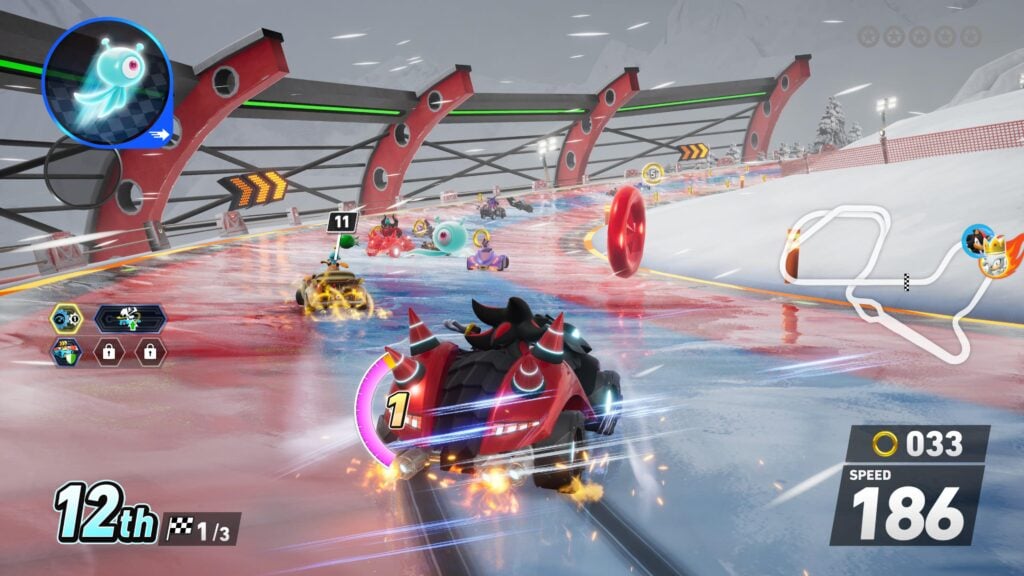
So, let's talk about this iteration's significant change, which is Travel Rings. These Rings appear at the end of the first lap, allowing the leading player to choose the location of the second lap, which changes the race course entirely. This change only happens for the duration of the second lap, but with the chance for modifiers to be placed on this new lap, it does have the potential to alter the leaderboard somewhat. One journey through a Travel Ring found me with an ever-charging boost item, whilst another found purple rings that afforded me a momentary boost when driven through handsomely littered throughout the course, influencing my route somewhat to maximise the boosts available to me.
Broadly speaking, though, the change of one of the 24 locales for only one of the three laps did little to add to the overall excitement of any particular race. Bar a few standout courses such as Chao Park and Wonder Museum, there was little that excited outside of providing a change for change's sake, even if the inclusion of said modifiers, however brief they were, kept things fresh.
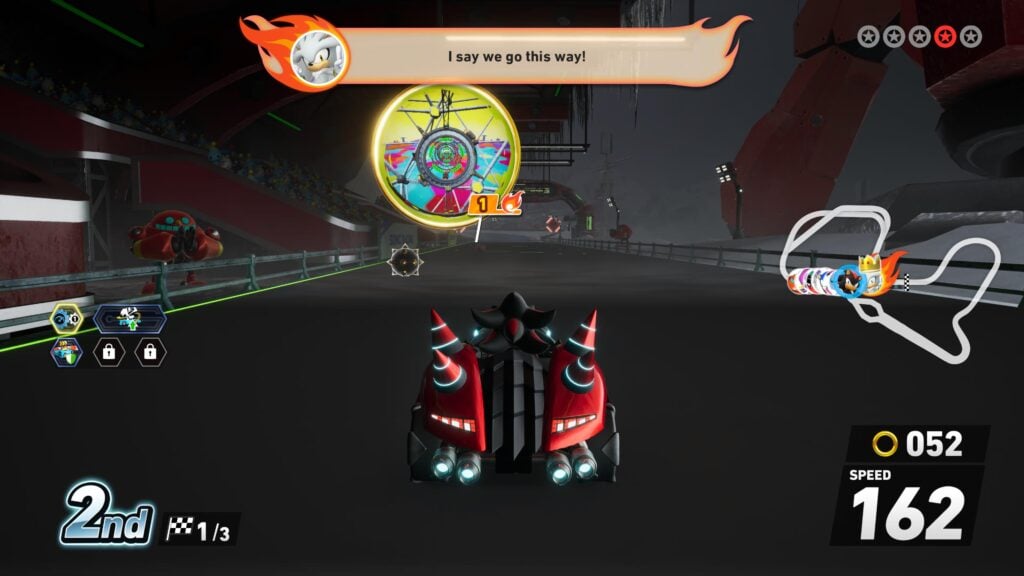
Mechanically speaking, the second half of each race is the items, which I found abhorrent at worst, and straight-up annoying at best. They feel entirely unbalanced and at odds with the rest of the racing, shifting the joyful, chaotic nature of the game to a frustratingly crude variant in no time at all. Whilst the standard assortment of weaponized tropes is here, like an item you place behind you, a homing attack, and so forth, the impact it has on any opponent, and naturally yourself when you inevitably get hit by one, feels far more severe than it needs to. It all but brings you to a near stop, and climbing up the placings isn't quite as appealing with the threat of it happening all over again. There's a thoughtfulness and a sublime subtlety with Mario Kart's item balancing, and it's simply not felt here.
Sonic Team boss Takashi Iizuka spoke to GamesRadar+ before launch, stating, "Anything that was very stressful for players, anything that always allowed people to come back from behind and win all the time needed to be removed from the concept. And then we'd go back in and playtest some more and find ways that we could balance and get it to feel the right amount of stressful and chaotic, but still lots and lots of fun, and always feeling fair to the racers.". With such a statement initially exciting, we all know the disappointment felt when you get "Mario Karted" near the end of a race, after all, it's doubley disappointing to know this was an explicit consideration that somehow feels worse than ever before. It's arguably the most significant negative of the game, and one that feels overwhelmingly all-encompassing considering their prevalent nature in each race.
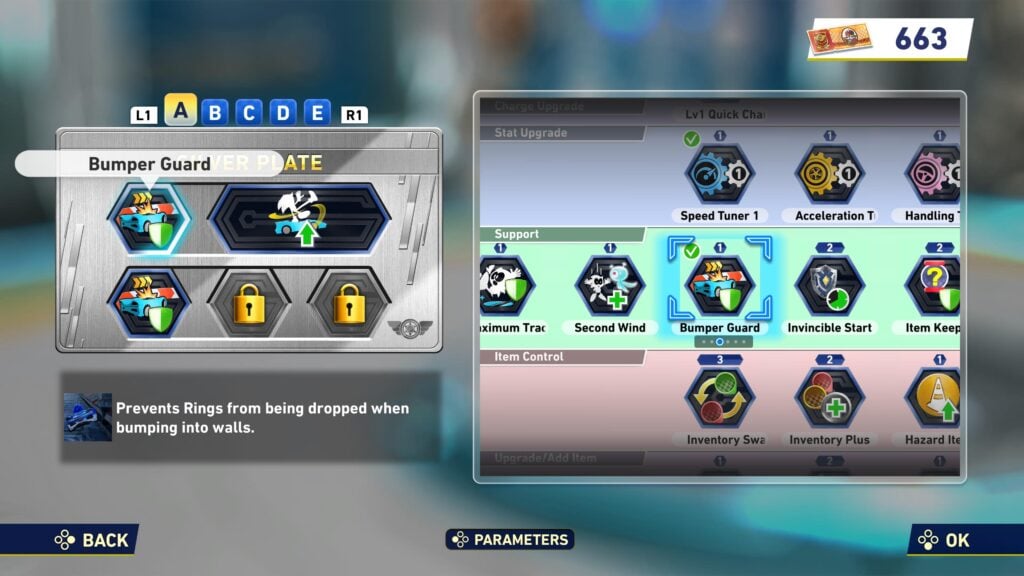
Items and the chance of coming across the correct item at the right time often felt like some of the only considerations to be made with each race, character, and vehicle, notwithstanding. Another new addition to CrossWorlds is the inclusion of Gadjets, which alleviate the restrictive design of the items. This new system allows you to equip perks, of which only a number can be fitted, with greater numbers being equippable after levelling up your license through continued racing. These grant various boons, such as starting the race with a boost item or increased handling when using a Speed vehicle.
The more effective a gadget, the more space it takes up on your license, but thankfully, you can swap between multiple saved licenses between races, should you need to switch up your approach. My favourite? One that prevents rings from being dropped whenever you bump into a railing, an outright inevitability considering, and forgive me if I haven't harped on about it enough, the absolute chaos and carnage ever present.
Sonic Racing: CrossWorlds got the Verified badge ahead of its release, so I was hoping it would be pretty decent on the Steam Deck. And I can happily say it's playable on the go, but I wouldn't play it straight out of the box.
The game starts off on the lowest possible settings, with graphical quality on Low, rendering scale at 50%, and framerate capped at 30. This makes the game very pixelated and not as smooth as I am used to in cart racers. But the races never went above 8.5W battery drain, so if you are looking for the longest battery life, this is going to be the way to do it. However, I wanted to push and see what was possible while balancing visual quality, framerate, and battery life.
Online servers were down at the time of testing, so I can confirm offline play is possible.

Choosing recommended settings for Sonic Racing was a tough one, but ultimately, I went with the most enjoyable for me personally. Despite the default settings being on the lowest with a 30 FPS limit, it can handle higher. So, after some testing, I discovered that it can run on the highest possible settings and hit 60 FPS if the render resolution is set to 75%. Overall, the game still looks really gorgeous, and I couldn't tell the difference, but with the render resolution lowered, it can hit 60 FPS with ease and stick to an average 15W - 17W battery drain.
There will be some spots where battery drain can spike, like when switching to new worlds or a ton of racers are around you, but it never truly drops below 60 or goes above 20W battery drain. There was one map I raced on that consistently stuck around 19W drain, but most are around that 15-17 average. Oddly enough, the most intensive area I was able to find is actually customizing your vehicles, which brings FPS down to the 50s and maxes out the battery drain.
This is exactly the experience I was hoping to have in a kart racer on the Steam Deck, and even with some higher battery drain, it's just fantastic. The model looks sharp, the framerate feels smooth, and it was just a blast to play like this. If you want 100% render resolution, you could set the framerate to 40 FPS, and it should be playable, but it's not nearly as enjoyable as 60.
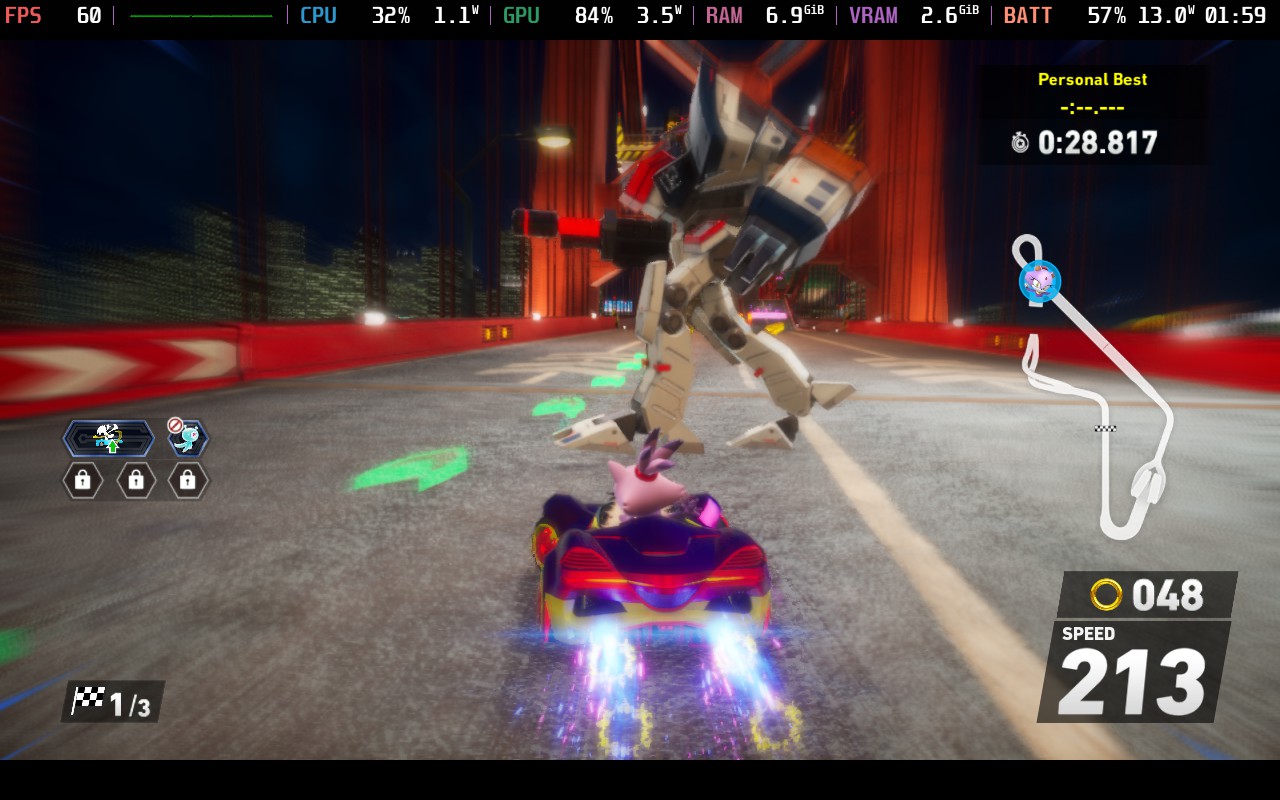
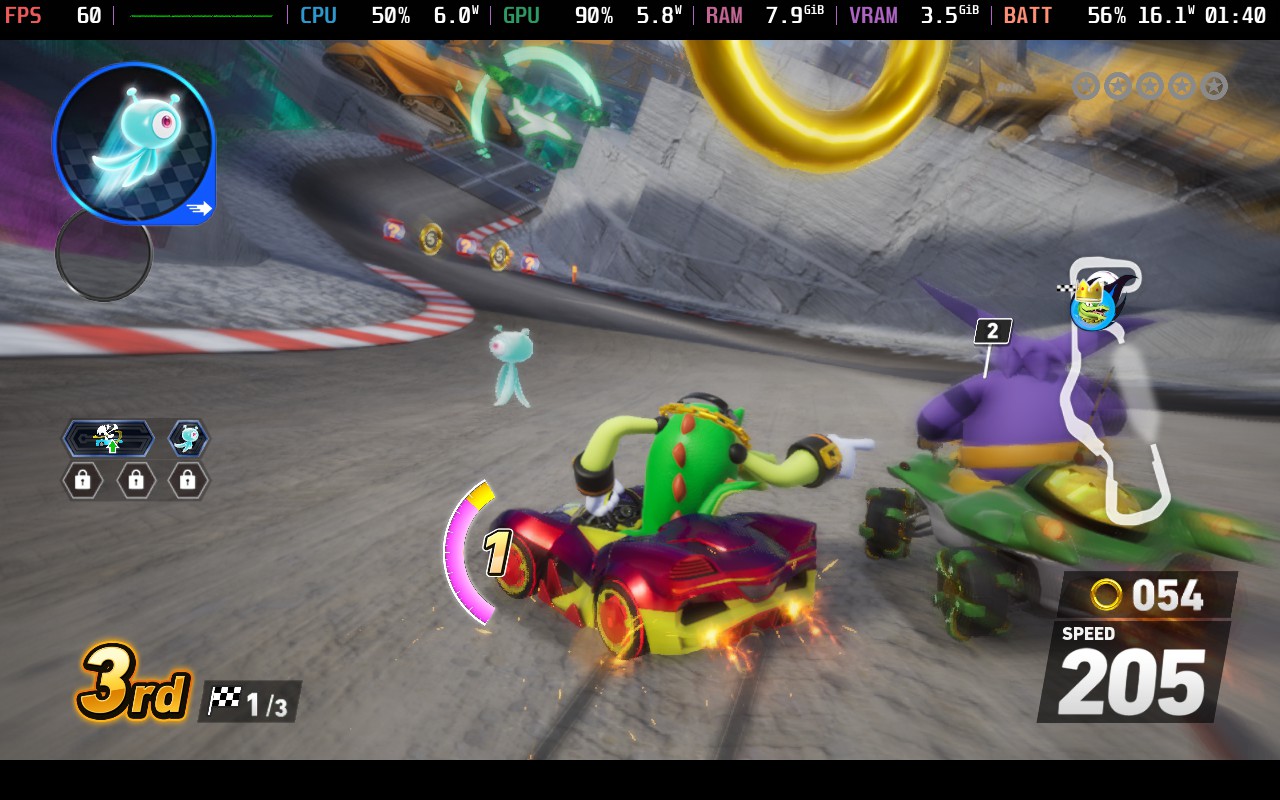

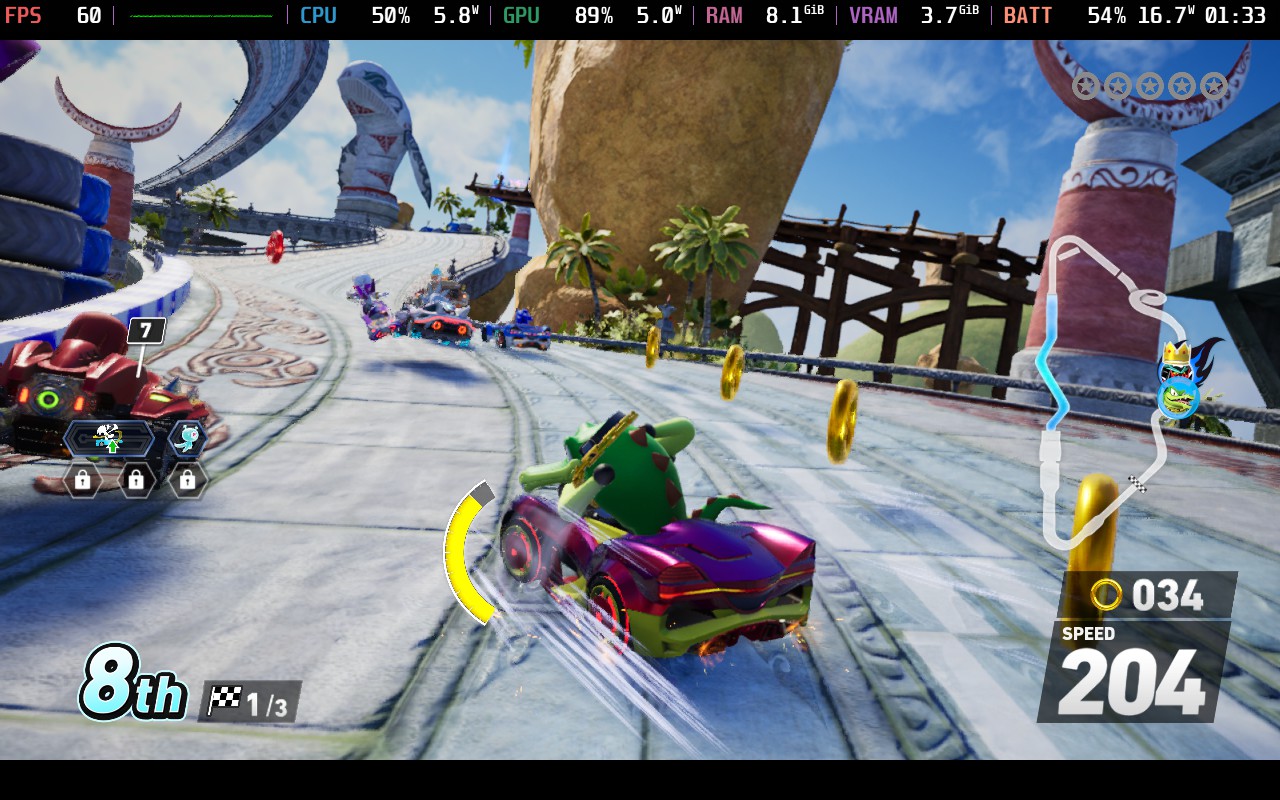
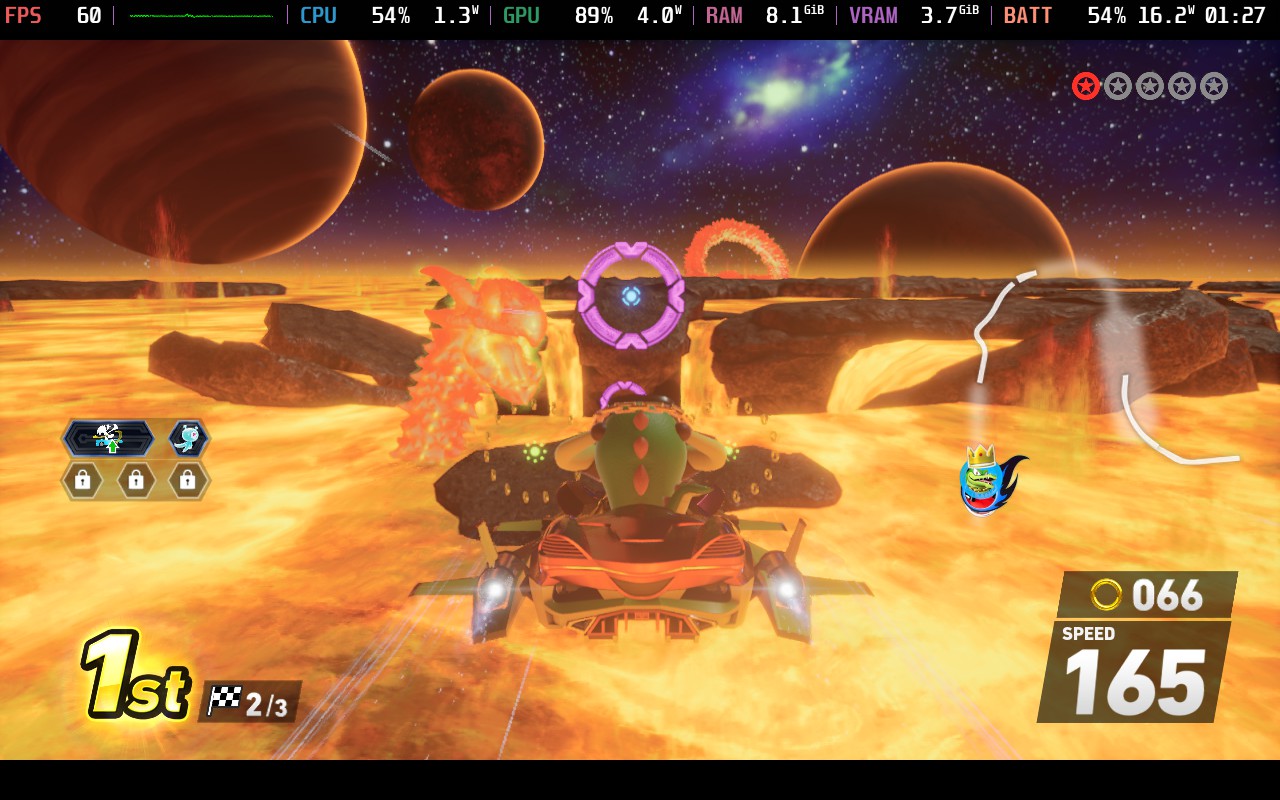
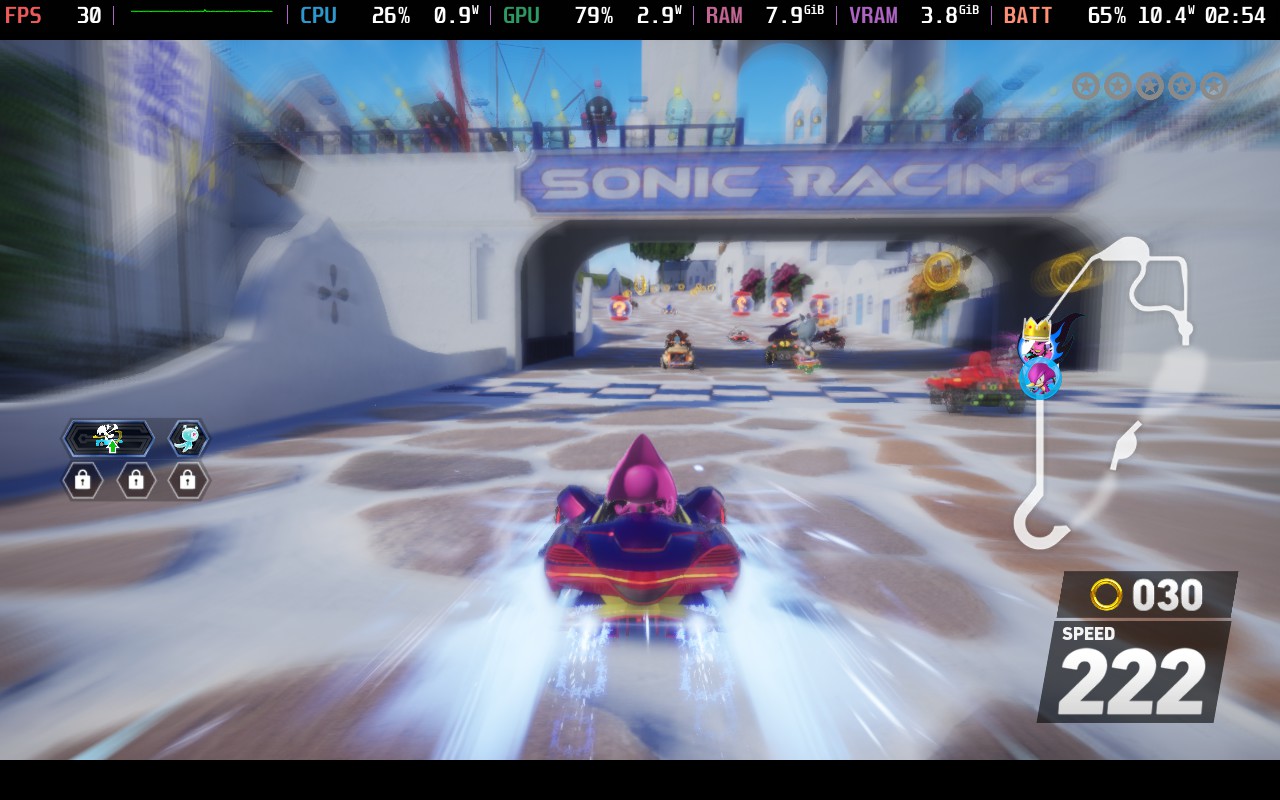
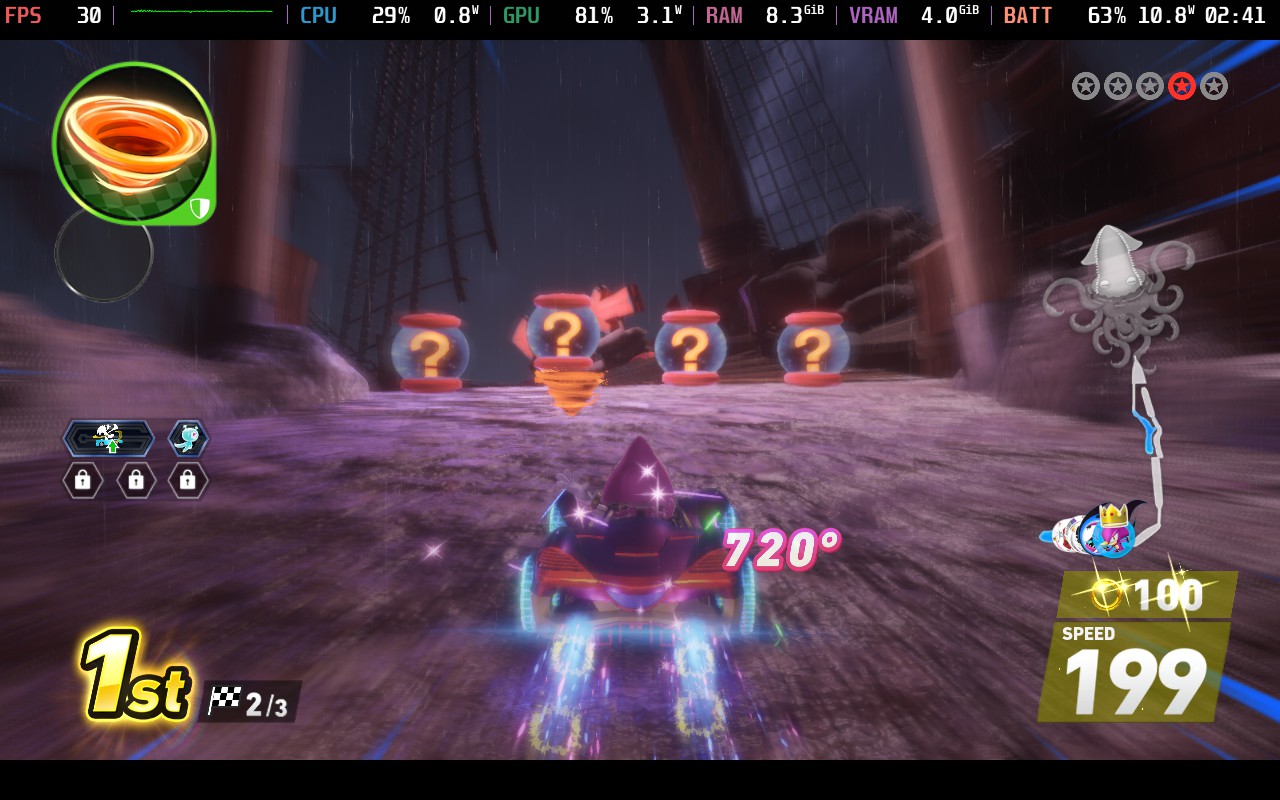
The default settings for the game are generally the best for battery life, since it is the lowest possible setting, but I didn't like how the game looked. However, if we turn the game to the highest possible settings with 100% render scale and just set the framerate to 30, we have a gorgeous-looking game that still has a decently low battery drain. It sticks around 10W - 11W on average, which is pretty fantastic given the visuals, and it's running at 100% render scale. This is a great way to play if you need an extra hour and a half or two of battery life.


The game allows you to change the race camera style, different UI toggles to hide other elements, customize input, toggle gyro tricks, change the language and voice, move different audio sliders, and change some online settings here and there.
The game doesn't support 16:10 resolutions, but it does have cloud saves and controller support. There are no HDR settings.
It's a confusing recommendation, to be sure. In isolation, nothing here stops Sonic Racing: CrossWorlds from having the potential to give moments of indisputable joy, even if the frustration felt when it came to the items did its best to ruin the fun. The issue is that managing to play CrossWorlds without likening the experience to Mario Kart, a game so strongly synonymous with the genre that it is nigh-on impossible not to make comparisons, is not a luxury most can afford.
With that in mind, it falls short in most regards. Whether the expanded roster, soon to include Joker from the Persona series, Hatsune Miku, Steve from Minecraft, and, of course, SpongeBob, is enough to garner enough continued interest and build upon the CrossWorlds moniker is up to you, but the core experience remains the same.
Our review is based on the PS5 version of this game. Steam Deck Performance and optimization will come soon.
If you enjoyed this review, be sure to check out the rest of the content on SteamDeckHQ! We have a wide variety of game reviews and news that are sure to help your gaming experience. Whether you're looking for news, tips and tutorials, game settings and reviews, or just want to stay up-to-date on the latest trends, we've got your back.
Sonic Racing: CrossWorlds has an arcadey charm to it with some great features, though the items tend to ruin the fun allthroughout.

Limit
N/A
Refresh Rate
90
HRS
NO
TDP Limit
No
Scaling Filter
Linear
GPU Clock
Disabled
No Forced Compatibility
Highest Quality Settings Except:
Framerate: 30
Rendering Scale: 100%
10W - 13W
60c - 65c
4.5 - 5 hours